Recent high-pressure emergency incidents across Queensland have highlighted a critical vulnerability for local property owners, particularly concerning the hazardous practice of tree lopping. When severe weather approaches or property boundaries become overgrown, many residents attempt dangerous canopy work themselves rather than relying on professional tree lopping, inadvertently creating severe risks that divert crucial emergency services. This article examines the intersection of local emergency response capabilities and the preventable accidents caused by untrained individuals operating heavy chainsaws at height. Property managers and homeowners in Cairns face unique environmental pressures, from intense tropical cyclones to rapid wet season growth, making proper canopy management an urgent priority. Understanding the technical requirements, local council regulations, and structural implications of canopy modification is essential for maintaining property safety without adding unnecessary strain to the region's first responders. By examining the current data and the realities of local emergency response, residents will learn how to approach necessary vegetation management legally, safely, and effectively.
Emergency Incidents Highlight the Need to Reduce Preventable Hazards
The strain on local first responders has become increasingly apparent, as demonstrated by a recent ABC News report from two weeks ago where police accidentally shot a woman while responding to an extremely dangerous incident involving an armed man on a residential Cairns street. This high-pressure event underscores the intense, unpredictable nature of emergency situations that require the full attention and resources of local authorities. When these highly trained tactical officers, paramedics, and fire crews are forced to divert their attention to a homeowner who has fallen from a ladder while wielding a chainsaw, the entire community's safety net is compromised. This diversion of critical resources means longer response times for genuine, unavoidable crimes and medical emergencies, directly impacting public safety. Unfortunately, amateur attempts at property maintenance frequently result in severe injuries that demand immediate, intensive medical intervention and emergency rescue operations.
One of the most significant sources of these preventable emergencies involves untrained individuals attempting complex canopy modifications without proper safety equipment or rigging knowledge. The consequences of these actions are often catastrophic, as highlighted when a Safety authority probes tree lopping death following a tragic accident involving elevated cutting work. The WorkSafe Queensland investigation into this incident revealed that the operator lacked basic fall arrest systems and proper anchor points, leading to a fatal plunge. Such fatalities not only devastate families but also trigger massive coronial inquests and immediate site shutdowns that can drag on for months. Operating a chainsaw while balanced on a ladder or suspended in a harness requires specialized training, and when untrained property owners attempt this work, the resulting falls or lacerations place an immense, avoidable burden on the local hospital system. The physical risks of DIY tree lopping are simply too high to justify the perceived cost savings.
Furthermore, the emotional and physical toll on the community extends beyond the immediate physical injuries sustained during these hazardous DIY attempts. Poorly executed canopy work often leads to severe property damage and neighborhood disputes, creating a different kind of emergency that requires intervention. Reports of Distress over chopped tree incidents illustrate how improper cutting not only ruins the aesthetic and structural integrity of significant vegetation but also creates localized hazards that threaten adjacent homes and power lines. The Cairns Local News report detailed how a neighbor's aggressive, unapproved pruning left a massive canopy completely unbalanced, sparking a bitter civil dispute. These conflicts often escalate into expensive legal battles over property damage liability and breach of duty of care, creating a severe community strain. Reducing these preventable hazards is a critical responsibility for every property owner in the region.
How Cairns Weather and Council Regulations Impact Canopy Management
The tropical climate of Far North Queensland presents unique challenges that make proper vegetation management both highly complex and absolutely necessary for structural safety. In leafy, established suburbs like Edge Hill, Whitfield, and Redlynch, the combination of Category 4 cyclone risks and over 3000mm of annual rainfall creates a volatile environment. During the intense wet season and the unpredictable cyclone season, overgrown or structurally compromised branches become significant liabilities that can destroy roofs, shatter windows, and sever critical utility lines. However, addressing these risks through unauthorized or amateur tree lopping often violates strict local regulations designed to protect the region's urban forest and ecological balance. The Cairns Regional Council Local Law No. 1 (Administration) 2016 and the associated Vegetation Management Code enforce comprehensive guidelines regarding the protection of significant vegetation, requiring specific permits and approvals before any major modification can occur on private or commercial land.
Property owners who ignore these local council regulations face severe consequences, including substantial financial penalties and potential legal action for environmental damage. The urban canopy provides essential shade, soil stabilization, and habitat, and indiscriminate cutting severely degrades these benefits. Recent data indicates that improper management has a cumulative negative effect on the environment, as seen when Cairns loses 80 percent of its mature canopy benefits in certain heavily developed subdivisions, such as Mount Sheridan, due to aggressive, unpermitted clearing. One critical failure mode occurs when entire rows of trees are lopped, creating a wind-tunnel effect that actually increases ground-level wind speeds during a storm, subsequently tearing roofs off nearby homes. When a property owner bypasses the council approval process to perform their own tree lopping, they not only risk immediate fines but also assume total liability for any subsequent property damage caused by the weakened structure during a tropical storm.
Understanding the intersection of extreme weather patterns and municipal regulations is vital for anyone managing a property in this tropical zone. The Queensland Neighborhood Disputes (Dividing Fences and Trees) Act 2011 works alongside council guidelines to dictate exactly how much of a canopy can be reduced without compromising the health of the specimen, ensuring that the remaining structure can withstand high wind loads. Failing to adhere to these specific climatic and legal parameters, such as ignoring the requirement to retain an adequate root-to-shoot ratio, transforms a natural asset into a dangerous liability. When a tree becomes waterlogged during a cyclone, a poorly managed canopy acts like a sail, leading directly to catastrophic root plate failure. This emphasizes why adherence to local laws and professional standards is non-negotiable for regional property owners.
The Technical Process of Professional Tree Lopping
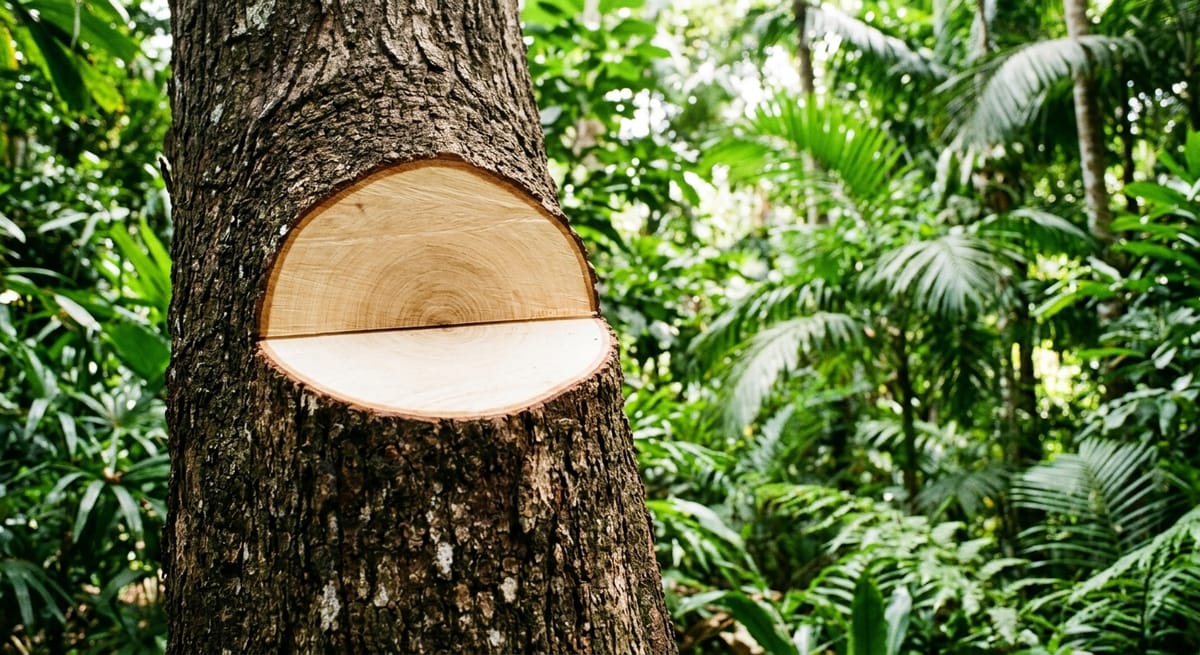
Performing proper tree lopping in a tropical environment like Cairns involves a highly technical sequence of operations governed by strict national guidelines, specifically AS 4373-2007 Pruning of Amenity Trees. This standard dictates that professional canopy reduction must prioritize the structural integrity and long-term health of the specimen, rather than simply hacking away branches to reduce height. The technical process begins with a comprehensive site risk assessment, identifying target zones below the canopy, mapping out adjacent power lines, and evaluating the current health of the wood. A professional operator will identify the exact branch collar and branch bark ridge, ensuring that every cut is made at the precise angle required to promote rapid compartmentalization and healing. Two common installation mistakes by amateurs include making 'flush cuts' directly against the trunk, which destroys the tree's natural defense barrier, and leaving 'stub cuts' that die back. The consequences of these errors are rapid heartwood rot and irreversible termite ingress.
The physical execution of professional tree lopping requires specialized rigging materials, heavy-duty friction devices, and certified climbing harnesses that allow the operator to dismantle large sections of wood in a controlled manner. Instead of allowing heavy timber to free-fall and potentially crush underground services or concrete driveways, experts use a system of pulleys and ropes to lower massive branches safely to the ground. This controlled rigging is essential for maintaining site safety and protecting the surrounding infrastructure. When these technical methods are ignored, the results can be devastating. For example, severe weather events frequently expose the weaknesses of poorly executed cuts, similar to when a Massive tree crashes into Newark home during Monday storms, illustrating the catastrophic property damage that occurs when structural integrity is compromised by amateur cutting or natural decay. When a certified inspector or municipal arborist evaluates a tree post-storm, they specifically check for hidden decay pockets, included bark at the branch unions, and the presence of fungal fruiting bodies that indicate long-term internal failure caused by past lopping.
Contrasting quality, standard-compliant work with the destructive practice of indiscriminate topping reveals clear visible differences in the resulting growth. Topping, which is the unscientific removal of the main leader and upper branches during improper tree lopping, forces the plant into a state of panic. This triggers rapid, weakly attached epicormic growth that shoots out from the damaged trunk. These epicormic shoots lack the structural stability of natural branches and are highly susceptible to tearing off during the next major cyclone. Furthermore, large, flat cuts made during improper tree lopping leave massive surface areas exposed to the intense tropical moisture, providing a direct entry point for fungal decay and wood-boring pests. What separates good, professional work from poor, amateur lopping can be identified by three specific visible signs: first, a clean callus roll forming around the cut rather than weeping, open wounds; second, an intact branch bark ridge that proves the cut was made at the correct angle; and third, a naturally tapered canopy structure rather than flat-topped, jagged stubs.
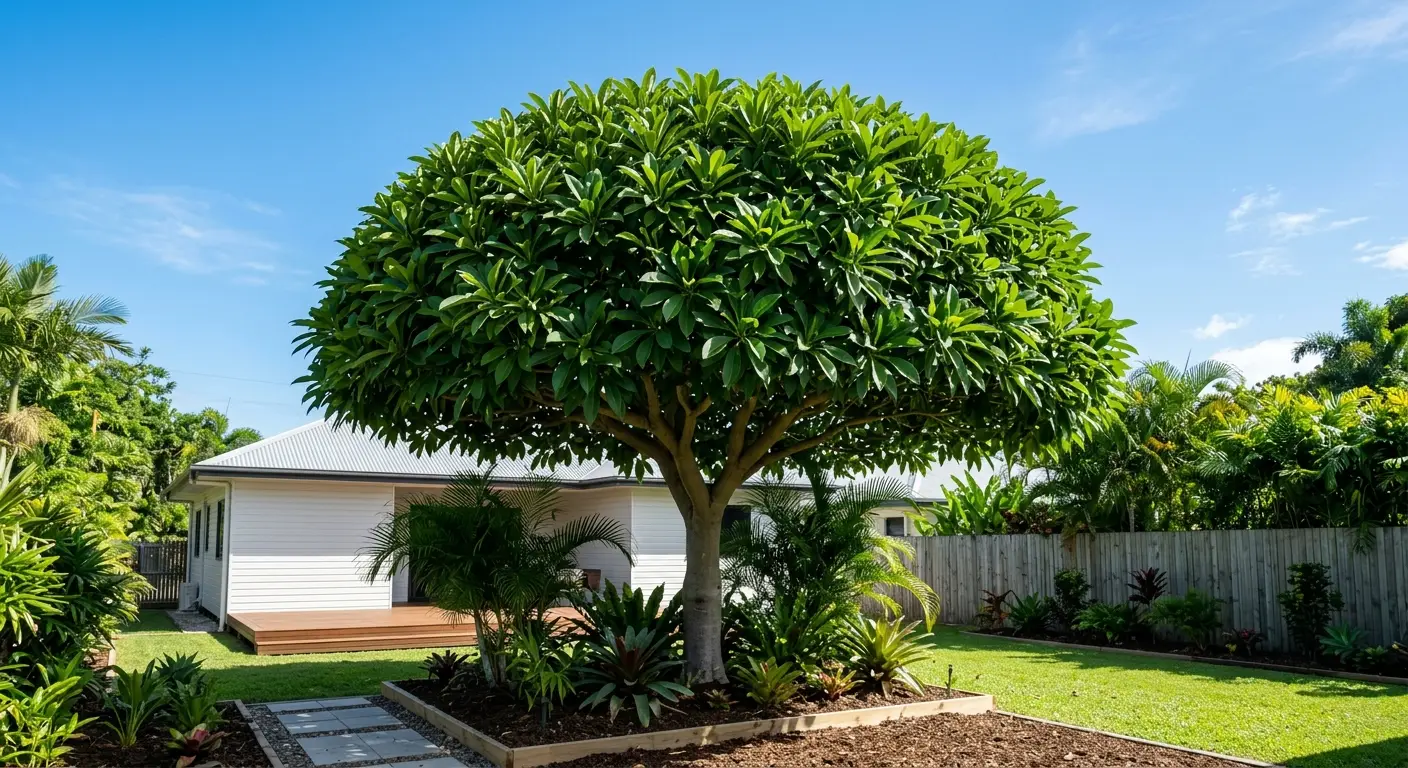
A compliant tree lopping project will leave the canopy looking balanced, with clear directional pruning that trains the growth away from structures while maintaining the natural shape. Inspectors and qualified arborists look for clean cuts just outside the branch collar, the absence of torn bark down the trunk, and a maintained leaf-to-root ratio that ensures the specimen can continue to photosynthesize adequately. By adhering to AS 4373-2007, professionals ensure that the necessary canopy reduction does not inadvertently create a much larger, more dangerous hazard for the property owner in the future. They also ensure all equipment is sterilized between cuts to prevent the transmission of localized pathogens, a critical detail completely overlooked by untrained operators.
What to Do Before Modifying Large Trees on Your Property
Before initiating any tree lopping project, the immediate first step is to conduct a thorough visual assessment and document the current state of the vegetation and surrounding property. Property owners must take clear, date-stamped photographs of the canopy, the trunk, the root zone, and any adjacent structures, fences, or power lines that might be affected by the work. Specifically, you should capture wide-angle shots of the entire canopy, detailed close-ups of the trunk base and root plate, and clear images of any overhead service lines. This documentation is critical for insurance purposes and council compliance, providing a definitive baseline of the property's condition before any heavy machinery arrives or any cutting begins.
The second crucial step is to verify the specific permit requirements with the Cairns Regional Council regarding the exact species and location of the vegetation in question. Many property owners incorrectly assume they can perform tree lopping without permission if the vegetation is on their private land, but local overlay maps often protect specific native species or trees of a certain trunk diameter. Checking the council website or speaking with a planning officer prevents the initiation of illegal work. You will likely need to submit a formal 'Application for Tree Works on Private Property' form, keeping in mind that the typical processing time is between 14 to 28 business days and must be factored into the project timeline.
Once you have determined the legal requirements, the third step involves securing detailed, written quotes from reputable service providers rather than accepting verbal estimates. A comprehensive quote for tree lopping must itemize the specific methods to be used, the plan for green waste removal, the timeline for completion, and a clear statement acknowledging adherence to AS 4373-2007. Furthermore, the quote must include a Safe Work Method Statement (SWMS) and outline the exact approved waste disposal facility to be used for the debris. Comparing at least three detailed quotes allows the property owner to identify any suspiciously low bids, which typically indicate a lack of proper equipment, inadequate insurance, or an intention to perform substandard, non-compliant work.
The fourth necessary action is the strict verification of the contractor's professional credentials, specifically checking for a minimum of AQF Level 3 Arboriculture certification. You must also request physical proof of current public liability insurance and worker's compensation coverage, ensuring the policies are valid for the specific high-risk nature of tree lopping. You must specifically ask for a Certificate of Currency and confirm the policy explicitly covers 'arboriculture' and working at heights, rather than just general landscaping. Allowing an unverified, uninsured operator onto your property transfers the immense financial liability of any potential accidents, property damage, or severe injuries directly onto your own home insurance policy.
Fifth, property owners must carefully evaluate the time-sensitive environmental factors that dictate the safest and most effective window for executing the work. In Far North Queensland, scheduling tree lopping just before the onset of the wet season or during active cyclone warnings dramatically increases the risk of soil compaction, site damage, and unpredictable wind loads during the cutting process. Heavy machinery operating on waterlogged clay soils causes severe root compaction that slowly suffocates the tree. Planning the project during the drier, more stable months between May and October ensures that the heavy equipment can access the site safely without destroying the saturated turf or causing deep rutting in the landscape.
Finally, it is essential to recognize the definitive threshold where professional intervention becomes legally and practically non-negotiable for the safety of the property. While a homeowner might safely use hand shears to prune small, ground-level shrubs, any tree lopping that requires a chainsaw, involves working above shoulder height, or takes place within ten feet of a power line demands a licensed expert. Furthermore, any vegetation management occurring within three meters of Ergon Energy power lines legally requires specialized spotters and insulated equipment. Attempting to bypass this rule not only violates workplace health and safety guidelines but also completely voids your home insurance coverage if the DIY attempt results in a crushed roof or a severed utility connection.
Why Qualified Arborists Ensure Compliance and Safety
The legal and financial landscape surrounding property maintenance in Queensland heavily penalizes those who attempt to bypass professional standards, particularly regarding complex canopy work. Engaging a qualified expert who holds an AQF Level 3 Arboriculture certification is not merely a recommendation; it is a fundamental requirement for ensuring that any tree lopping complies with the stringent safety protocols mandated by Safe Work Australia and the Queensland Building and Construction Commission (QBCC). In Queensland, this specific required credential is issued by a Registered Training Organisation under the Australian Qualifications Framework. Operating without this qualification while undertaking high-risk tree work can result in severe penalties, including fines exceeding $20,000 for safety breaches under the Work Health and Safety Act 2011. Unlicensed operators frequently utilize dangerous, outdated techniques that compromise the structural integrity of the wood, leaving the property owner fully exposed to catastrophic liability. When an uncertified individual performs substandard tree lopping, they create hidden weaknesses in the canopy that are guaranteed to fail under the extreme wind loads typical of a Cairns cyclone season.
The financial consequences of utilizing unqualified labor extend directly into your home insurance and property warranties. Insurance providers routinely investigate claims for storm damage, and if an adjuster determines that a crushed roof was caused by a branch that failed due to improper, uncertified tree lopping, the entire claim will likely be denied. Major providers like Suncorp and RACQ explicitly state in their Product Disclosure Statements that damage resulting from illegal, uncertified property maintenance will void your Home and Contents policy coverage. The homeowner is then left to cover tens of thousands of dollars in structural repairs out of pocket. To avoid this devastating scenario, property managers must ensure that all canopy reduction is handled by verified professionals. For comprehensive solutions, property owners should explore dedicated Tree Lopping And Pruning services that guarantee compliance with all national standards and local council overlays.
Furthermore, professional operators carry comprehensive public liability insurance that protects the homeowner in the rare event of an accident during the removal process. This level of protection is a stark contrast to the high-risk gamble of hiring an uninsured neighborhood handyman. It is always safer to consult with experts focused on Arborist And Tree Health to determine the most compliant path forward. As noted when Cairns Tree Lopping Pros Provides Tree Removal Services, utilizing established, insured professionals ensures that the heavy, dangerous work is completed efficiently, legally, and without exposing the property owner to the severe financial ruin associated with non-compliant DIY accidents. These verified businesses carry a minimum of $20 million in public liability coverage, providing absolute peace of mind that neither your property nor your financial future is at risk when managing complex vegetation.
Frequently Asked Questions
Do I need council approval for tree lopping in Cairns?
In Cairns, council approval for tree lopping is often required, particularly for significant trees, protected species, or trees located within certain zones like conservation areas or near waterways. The Cairns Regional Council has specific regulations outlined in their planning scheme regarding vegetation management. It is always advisable to contact the council directly or consult their website to determine if your specific tree lopping project requires a permit, as undertaking work without necessary approval can result in fines and remediation orders.
How much does tree lopping cost in Cairns?
The cost of tree lopping in Cairns varies significantly depending on several factors, including the size and species of the tree, its accessibility, the complexity of the job, and the amount of debris removal required. Small, easily accessible trees might cost a few hundred dollars, while large, hazardous trees requiring specialized equipment and extensive cleanup could run into thousands. Obtaining multiple quotes from qualified arborists is recommended to get an accurate estimate for your specific tree lopping needs.
What is the difference between tree lopping and pruning?
Tree lopping and tree pruning are distinct practices with different objectives and impacts on tree health. Tree lopping typically involves indiscriminately cutting branches back to stubs, often without regard for the tree's natural growth habit or long-term health. This can stress the tree, lead to weak regrowth, and increase susceptibility to disease. In contrast, tree pruning is a more precise and skilled practice that involves the selective removal of branches to improve the tree's health, structure, safety, and appearance, following arboricultural best practices.
Can I cut branches overhanging my property in QLD?
In Queensland, you are generally permitted to cut branches that are overhanging your property from a neighbour's tree, provided you do so without trespassing onto their property and without causing damage to the tree beyond the overhanging portions. You are usually only allowed to cut back to the boundary line. It is always recommended to discuss the issue with your neighbour first to maintain good relations and potentially share the cost, as you are responsible for disposing of the removed branches.
Who is responsible for fallen trees on boundary lines in Cairns?
In Cairns, the responsibility for fallen trees on boundary lines can be complex and depends on where the tree originated. If a tree falls from one property onto a neighbour's property, the owner of the property where the tree originated is generally responsible for its removal and any damage caused, especially if the tree was unhealthy or poorly maintained. However, if the tree was healthy and fell due to an 'act of God' like a severe storm, responsibility can become less clear and may involve insurance claims. It is best to consult with your insurer and potentially seek legal advice in such situations.
Conclusion
The recent strain on emergency services across Queensland serves as a stark reminder that property owners must take proactive steps to eliminate preventable hazards from their homes and businesses. Attempting dangerous DIY tree lopping not only risks severe personal injury but also exposes the property to catastrophic structural failures during the intense Cairns cyclone season. By understanding the strict local council regulations and insisting on compliance with AS 4373-2007, residents can protect their investments and maintain a safe environment. The most responsible action you can take today is to step back, document the condition of your canopy, and engage a fully licensed, AQF Level 3 certified arborist to assess your property safely.
More Tree Lopping and Pruning Services at Arbor Tree Removal Cairns
For more information about Tree Lopping and Pruning services at Arbor Tree Removal Cairns, explore the pages below: