
Managing residential tree removal requires careful planning, especially when property access becomes a matter of public safety. Property owners often delay residential tree removal until a severe storm hits or an emergency occurs, which can lead to disastrous consequences for both the property and the surrounding neighborhood. In tropical environments like Far North Queensland, vegetation grows at an accelerated rate, rapidly turning minor landscaping issues into major structural hazards. The combination of high annual rainfall, intense humidity, and fertile volcanic soils means that species such as weeping figs, mahogany, and large eucalypts can double their canopy size in a fraction of the time it takes in temperate climates. When large branches overhang driveways, rooflines, and boundary fences, they do more than just drop leaves into gutters. They create physical barriers that complicate daily life, damage underground plumbing with invasive root systems, and pose severe risks during high-stress situations.
A recent critical incident in the region has highlighted exactly why maintaining clear access paths is a fundamental responsibility for homeowners and property managers. Emergency responders rely on unobstructed routes to reach people in distress, and overgrown vegetation is a common, yet entirely preventable, obstacle. When a crisis strikes, the physical layout of a front yard can dictate the success or failure of a rescue operation. This article examines the technical standards, local regulations, and practical steps involved in proper canopy management and extraction. By understanding the mechanics of residential tree removal, property owners can make informed decisions that protect their assets, ensure compliance with local council laws, and maintain safe access for essential services at all times, ultimately fostering a safer and more resilient community.
Recent Cairns emergency response highlights property safety
According to a detailed report by ABC News and Headlines Australian Broadcasting Corporation published in late 2023, police officers recently responded to an extremely dangerous incident involving an armed man on a residential Cairns street, which tragically resulted in an innocent bystander being shot. The report noted that the standoff occurred in a densely populated suburban street where tactical response group officers were severely hindered by unmanaged, overgrown foliage blocking the property's driveway and sightlines. During high-stakes emergency responses like this, police, paramedics, and fire crews require immediate, unimpeded access to properties and street frontages. When a property is surrounded by dense, unmanaged vegetation, emergency vehicles cannot park close to the entrance, and personnel are forced to navigate through physical barriers while carrying heavy medical or tactical equipment. This delay of even a few seconds can drastically alter the outcome of a critical emergency.
The immediate implication of this obstruction is a severe delay in medical evacuation and tactical positioning. When paramedics cannot bring stretchers directly to the doorway, patient transport times increase by critical minutes. This delay forces emergency personnel to carry heavy equipment over uneven, root-damaged ground, increasing the risk of responder injury and compromising patient survivability in life-or-death scenarios. Furthermore, the connection between emergency response times and proper residential tree removal is often overlooked until a crisis occurs. Ambulances and fire trucks require significant vertical and horizontal clearance, with Queensland Fire and Emergency Services (QFES) typically needing at least 4.5 meters of overhead space and 3 meters of width to avoid damaging their vehicles or communications antennas. Low-hanging branches, unstable trunks, and root-damaged driveways force these large vehicles to park further away from the incident. In neighborhoods where large native species have been allowed to grow unchecked near roadsides and property boundaries, the entire street can become a bottleneck during a multi-vehicle emergency response.
Community awareness regarding vegetation management is shifting as the consequences of neglect become more visible. Reports of Distress over chopped tree incidents often highlight the tension between preserving urban canopies and ensuring public safety, particularly in older suburbs where heritage trees clash with modern infrastructure needs. While mature vegetation provides valuable shade, reduces the urban heat island effect, and offers crucial wildlife habitat, it must be balanced against the practical requirements of urban infrastructure. When a specimen becomes structurally compromised, diseased, or grows too large for its designated residential footprint, it transitions from an environmental asset to a public liability. Proper residential tree removal addresses these hazards before they interfere with powerlines, pedestrian pathways, or emergency access routes, ensuring that the urban forest remains a benefit rather than a danger.
The broader impact on the local environment is also a factor, as noted when Cairns loses 80 percent of its safe clearance zones in certain densely populated suburbs like Manunda and Mooroobool due to rapid tropical growth and deferred maintenance. Property managers must recognize that residential tree removal is not about indiscriminately clearing land, but rather about selectively extracting dangerous specimens that threaten human life and property. By maintaining clear access corridors and proactively managing canopy spread, homeowners directly contribute to the overall safety and resilience of their neighborhood. This diligent approach ensures that when emergency services are called, they can perform their duties efficiently and safely, without fighting through a jungle of neglected branches and hazardous root systems.
How cyclone season threatens overgrown Cairns properties
The tropical climate of Far North Queensland introduces unique environmental pressures that make proactive residential tree removal an absolute necessity. From November to April, the region experiences its annual cyclone season, bringing torrential rainfall, severe thunderstorms, and destructive wind shear. During these months, the soil becomes heavily saturated, significantly reducing the friction that holds massive root systems in place. When cyclonic winds hit a canopy that has not been properly thinned or managed, the entire structure acts like a sail, catching the wind and transferring immense rotational force down to the compromised root plate. In older, leafy suburbs like Edge Hill, Whitfield, and Redlynch, the combination of massive heritage trees and highly reactive clay soils creates a perfect storm for catastrophic botanical failures.
One of the most dangerous failure modes during a cyclone is root plate upheaval caused by soil liquefaction. As torrential rain saturates the ground, the soil loses its cohesive strength and turns into a muddy slurry. When Category 3 or higher cyclonic winds strike a dense, unpruned canopy, the immense aerodynamic drag forces the tree to sway violently. This rotational force is transferred down the trunk into the weakened root system, causing the entire root plate to snap or uproot entirely. When this happens, the tree leverages out of the ground, pulling up underground water pipes, shattering concrete driveways, and destroying retaining walls in the process. The resulting destruction is catastrophic and highly expensive to repair. A clear example of this danger is seen when a Massive tree crashes into Newark home during Monday storms, illustrating a universal threat that applies equally to historic and modern properties in any storm-prone region. In a dense urban environment, a falling trunk will easily crush roof trusses, shatter windows, and destroy boundary fences. If the specimen falls across a public road or takes down powerlines, the property owner may face severe liability issues and substantial council fines for failing to maintain their property safely.
Local regulations dictate that property owners hold the primary responsibility for mitigating these risks before the severe weather arrives. The Cairns Regional Council enforces specific vegetation management guidelines, such as Local Law No. 4 (Local Government Controlled Areas, Facilities and Roads), designed to minimize storm debris and protect municipal infrastructure. Furthermore, all pruning and maintenance should align with AS 4373-2007 (Pruning of amenity trees), which outlines the correct methods for canopy reduction to minimize wind resistance without compromising the tree's health. Ignoring these guidelines and delaying residential tree removal can result in insurance claims being denied if the provider determines that the hazard was pre-existing, diseased, and negligently ignored. Homeowners must conduct regular visual inspections of their yards, looking for signs of disease, fungal growth, termite mudding, or structural leaning that indicate a specimen is no longer stable enough to survive high wind loads. For further reading, see #1 Rated Tree Loppers Cairns.
Executing a residential tree removal project during the dry season is significantly safer and more cost-effective than attempting an emergency extraction in the middle of a torrential downpour. When the ground is dry and stable, heavy machinery such as elevated work platforms, cranes, and heavy-duty wood chippers can access the site without destroying the surrounding lawn, sinking into mud, or damaging underground utility lines. Furthermore, scheduling this work ahead of the storm season ensures that the property is secure, access routes remain open for emergency services, and the overall risk of catastrophic property damage is reduced to an absolute minimum. Proactive dry-season management also means homeowners avoid the massive price surges and long waiting lists that inevitably occur when dozens of properties require emergency tree services simultaneously after a major cyclonic event.
Technical standards for safe residential tree removal
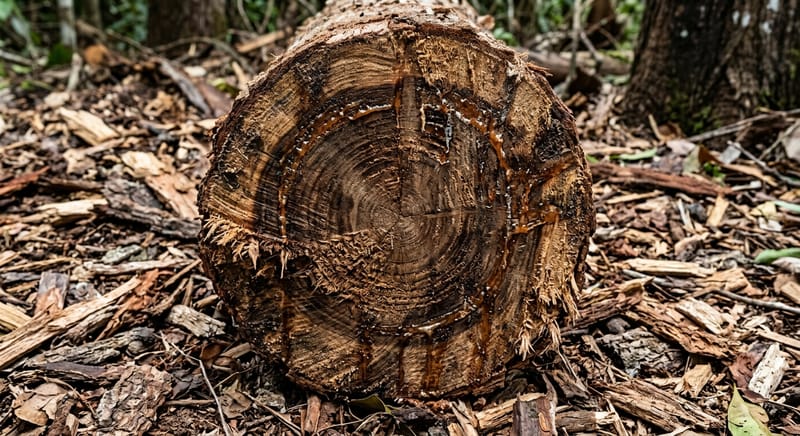
Executing residential tree removal safely requires strict adherence to established industry protocols and heavy machinery operation standards. In Australia, this means complying with AS 4373-2007 (Pruning of amenity trees) and AS 4970-2009 (Protection of trees on development sites). The process always begins with a comprehensive site assessment, where practitioners evaluate the structural integrity of the wood, the center of gravity, and the proximity to underground services and overhead powerlines. Before any cutting begins, a qualified arborist or safety inspector conducts a rigorous structural assessment. The inspector checks for internal decay using a resistograph, maps the extent of termite damage within the heartwood, and evaluates the tension and compression wood on leaning trunks to determine the safest felling direction. This initial stage dictates the entire methodology. If a specimen is structurally sound and space permits, directional felling may be used. However, in confined urban spaces, sectional dismantling is the only compliant method, requiring workers to ascend the trunk and carefully lower individual sections to the ground using advanced rigging techniques.
The materials and equipment utilized during residential tree removal are highly specialized and rated for extreme dynamic loads. Practitioners use friction devices like Port-a-Wraps, heavy-duty double-braided polyester rigging ropes, and impact blocks to control the descent of massive timber sections that can weigh several tons. By wrapping the rigging rope around a friction cylinder, a ground worker can safely lower a heavy branch that would otherwise crush the pavement, destroy landscaping, or damage underground pipes upon impact. Elevated work platforms (EWPs) and high-capacity wood chippers, often capable of processing logs up to eighteen inches in diameter, are deployed to efficiently process the waste material directly on site, turning hazardous timber into manageable, reusable mulch.
All operations must strictly comply with the Safe Work Australia Guide for Managing Risks of Tree Trimming and Removal Work. This national standard outlines the mandatory safety zones, personal protective equipment (PPE) including chainsaw chaps and comms-integrated helmets, and communication protocols required on site. For example, the standard dictates that a drop zone must be clearly demarcated with high-visibility cones and restricted to essential personnel only. A contractor who ignores these safety perimeters, fails to use a spotter, or attempts to free-fall large sections of timber without proper rigging is operating outside the law. Compliance with this standard separates professional residential tree removal from dangerous, amateur operations that put the entire neighborhood at risk of severe injury or death.
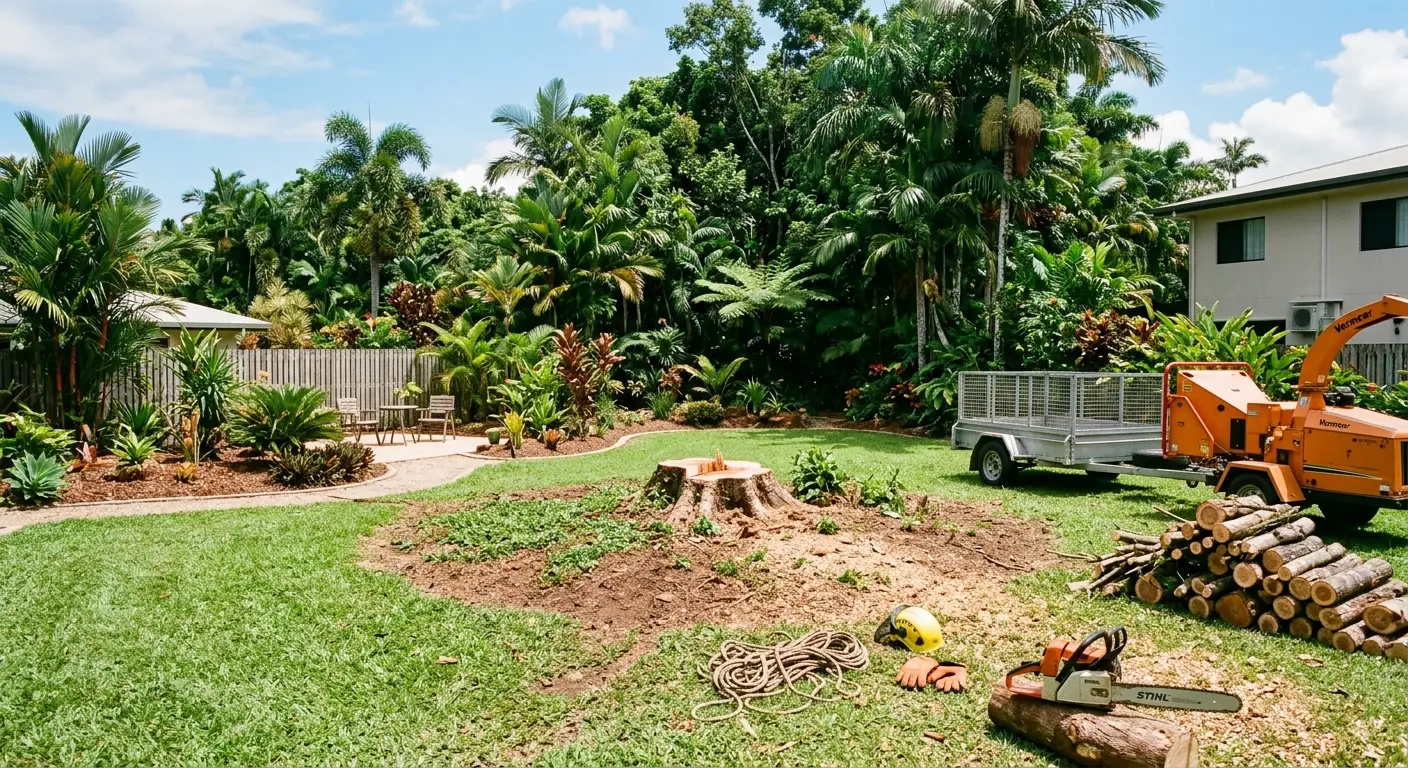
There are clear visible signs that distinguish a high-quality residential tree removal operation from a substandard one. First, a professional crew will utilize controlled rigging for every major branch, ensuring nothing hits the ground with uncontrolled force, thereby protecting the soil structure and surrounding assets. Second, the final stump will be cut cleanly and as close to the ground level as possible, without jagged edges or torn bark, preparing it perfectly for subsequent grinding. Third, the site cleanup will be meticulous, with all green waste processed through a chipper, sawdust raked up, and all debris removed from the property, leaving the yard pristine. In contrast, poor workmanship is evident when heavy branches are dropped directly onto lawns, leaving deep craters, broken sprinkler heads, damaged fences, and a massive pile of unprocessed timber left for the homeowner to deal with.
Common failure points during improper residential tree removal often lead to devastating financial and physical consequences. One major mistake is "barber-chairing" the trunk, which occurs when an improper face notch causes the tree to split vertically during the back cut, violently kicking back and potentially killing the chainsaw operator. Another frequent error is miscalculating the dynamic load weights of a falling branch, causing the rigging rope to snap under the shock load and the timber to swing uncontrollably into an adjacent structure or powerline. A third common mistake is ignoring drop zones, leading to severe property damage or bystander injury when a branch deflects off the main trunk. To understand the full scope of professional operations, property owners can review resources where Cairns Tree Lopping Pros Provides Tree Removal Services, highlighting the absolute necessity of combining heavy machinery with rigorous, uncompromising safety protocols.
Immediate steps to secure your property before storms
The first step in preparing for residential tree removal is conducting a thorough visual assessment and documenting the current state of the vegetation. Property owners should walk their perimeter and look for specific warning signs, such as deep structural cracks in the trunk, fungal fruiting bodies near the base, or significant soil heave on one side of the root plate. It is crucial to take clear, time-stamped photographs of these hazards, specifically capturing V-crotch inclusions, measuring the exact distance branches are encroaching on powerlines, and documenting branches pressing against roof tiles. Documenting the situation before touching anything is vital for insurance purposes and provides clear, undeniable evidence if local council approval is required for the extraction.
Once the hazards are documented, the next mandatory step is checking the local planning scheme and permit requirements. In this region, the Cairns Regional Council enforces strict local laws regarding vegetation clearing, and many residential blocks are subject to significant landscape overlays or heritage protections. Property owners must visit the council website or contact their planning department to submit an 'Application for Operational Works - Vegetation Clearing' to verify if a permit is required for their specific residential tree removal project. Starting work without the necessary written approval can result in massive financial penalties and legal action. Processing times for these applications can range from 14 to 28 business days, which directly impacts project scheduling and must be factored into storm preparation timelines.
Securing detailed, itemized quotes is the third critical phase of the preparation process. A proper quotation for residential tree removal must explicitly state the full scope of works, including the method of extraction, the provision of Safe Work Method Statements (SWMS), the processing and legal disposal of green waste at council facilities, and whether stump grinding is included in the final price. Property owners should obtain at least three written quotes and compare them carefully, paying close attention to what is excluded from the service. If a quote is drastically cheaper than the others, it usually indicates that the contractor plans to leave the heavy timber on the lawn, skip the stump removal entirely, or operate without the necessary safety equipment.
Verifying contractor credentials and insurance coverage is an absolute necessity before allowing anyone to commence work on the property. For compliant residential tree removal, the primary operator should hold a minimum of an AQF Level 3 in Arboriculture and possess valid public liability insurance of at least A$20 million. Property owners must ask to see the certificate of currency and verify it directly with the insurance provider. Hiring an unqualified operator not only risks severe property damage but can also completely void your home and contents insurance. Property owners must explicitly ask if the contractor's insurance covers 'damage to property being worked upon' and request proof of current WorkCover Queensland policies for all onsite staff to avoid liability for workplace injuries.
Once a qualified contractor is selected, property owners must undertake specific site preparation steps to ensure safe access on the day of the residential tree removal. This includes relocating all vehicles from driveways and street parking zones to accommodate heavy chipper trucks, unlocking side gates for personnel access, removing fragile garden ornaments or potted plants from the drop zone, and formally notifying immediate neighbors at least 48 hours prior to the commencement of heavy machinery operations to manage noise expectations and traffic flow.
The final step involves post-removal site management and long-term landscape recovery to ensure the property remains safe and visually appealing. Property owners should discuss the exact depth of the stump grinding required, typically 300mm below surface level, to prevent aggressive root regrowth, eliminate trip hazards, and allow for future landscaping or construction. Additionally, consulting with the local council about planting compliant, cyclone-resistant native species ensures the property recovers its shade canopy while strictly adhering to local vegetation overlays and long-term urban planning goals.
Professional value and licensing requirements
Engaging a professional for residential tree removal is not merely a matter of convenience; it is a strict legal and financial imperative governed by state laws and industry regulations. In Queensland, while the Queensland Building and Construction Commission (QBCC) does not issue a specific "tree lopping" license unless the work is directly incidental to building construction, the legally recognized standard for a qualified professional is the Australian Qualifications Framework (AQF) Level 3 in Arboriculture. This qualification must be issued by a recognized Australian Registered Training Organisation (RTO). Furthermore, reputable businesses will maintain active membership with peak industry bodies such as the Queensland Arboricultural Association (QAA) or Arboriculture Australia, which mandates ongoing professional development and adherence to strict ethical and safety codes.
The penalties for engaging in unsafe, unlicensed, or non-compliant residential tree removal are severe. Under the Work Health and Safety Act 2011 (QLD), any contractor performing high-risk tree work without the appropriate safety systems, SWMS, and competencies can be prosecuted by Workplace Health and Safety Queensland (WHSQ). If an amateur operation results in serious injury or death, the penalties can include fines exceeding $3 million for corporate entities and up to 5 years imprisonment for individuals found guilty of reckless conduct. Property owners who knowingly hire uncredentialed workers "cash-in-hand" can also find themselves entangled in these legal proceedings if they failed to ensure a safe working environment on their premises.
The insurance and warranty implications of using unqualified operators are equally devastating. Standard home and contents insurance policies provided by major Australian insurers explicitly require that any maintenance or high-risk work on the property be conducted by licensed, insured professionals. If a homeowner hires an uninsured "lopper" and a multi-ton branch crashes through the roof of their Queenslander home, the insurance provider will likely void the claim entirely due to negligence. This leaves the homeowner personally liable for hundreds of thousands of dollars in structural repairs, not to mention the potential liability if the falling timber damages a neighbor's property or injures a bystander.
Ultimately, the professional value of hiring an AQF Level 3 Arborist lies in their ability to transfer all operational risk away from the homeowner. A fully insured, credentialed business provides a comprehensive safety net, ensuring that every cut is calculated, every piece of rigging is load-tested, and every legal requirement is met. By demanding to see an RTO-issued AQF Level 3 certificate, a $20 million public liability Certificate of Currency, and active WorkCover Queensland documentation, property owners guarantee that their residential tree removal is handled with the utmost technical precision and legal compliance.
Frequently Asked Questions
Do I need council approval for residential tree removal in Cairns?
Yes, in most cases, you will need council approval for residential tree removal in Cairns. The Cairns Regional Council has specific regulations outlined in its Planning Scheme regarding vegetation management and protection. These regulations often apply to trees exceeding a certain height or trunk diameter, or those belonging to protected species. It is always advisable to contact the council directly or consult their website to determine if your specific tree removal project requires a permit before commencing any work, as penalties can apply for unauthorized removal.
How much does it cost to remove a large tree in Queensland?
The cost to remove a large tree in Queensland can vary significantly, typically ranging from $800 to over $3,000, depending on several factors. These factors include the tree's height and diameter, its proximity to structures or power lines, the complexity of the removal (e.g., requiring specialized equipment like cranes), and the need for stump grinding or debris removal. Access to the tree and the arborist's experience and insurance also play a role in the final quotation. Obtaining multiple quotes from qualified arborists is recommended for accurate pricing.
Can I cut down a tree on my property without permission in QLD?
Generally, you cannot cut down a tree on your property without permission in Queensland, especially if it is a protected tree or falls under local council regulations. Many local councils, including Cairns, have tree protection orders or vegetation management plans that restrict the removal of certain trees based on species, size, or location. Even if a tree is not specifically protected, there might be requirements for permits or notification. Always check with your local council's planning department before removing any tree to avoid potential fines or legal repercussions.
Who is responsible for a tree on the boundary line in QLD?
In Queensland, responsibility for a tree on a boundary line can be complex and depends on the specific circumstances. Generally, if the tree's trunk is entirely on one property, that property owner is responsible for its maintenance and any damage it causes. However, if the trunk straddles the boundary, both property owners may share responsibility. Issues like overhanging branches or invasive roots can also lead to disputes. It is often best for neighbours to communicate and agree on a course of action, potentially sharing costs for maintenance or removal, or seeking mediation if an agreement cannot be reached.
What happens if a tree falls on my neighbour's house during a cyclone?
If a tree from your property falls on your neighbour's house during a cyclone in Queensland, the responsibility for the damage generally falls to your neighbour's home insurance policy. This is because cyclones are considered an 'act of God,' and typically, property owners are not held liable for damage caused by natural disasters unless negligence can be proven. However, if the tree was known to be diseased, unstable, or poorly maintained prior to the cyclone, and you failed to address these issues, your liability could potentially be argued. It is crucial to have appropriate home insurance and to maintain trees on your property to mitigate such risks.
Conclusion
Proactive residential tree removal is a critical component of property maintenance, particularly in cyclone-prone regions like Far North Queensland. By understanding the severe risks posed by overgrown vegetation during extreme weather events, property owners can take decisive action to protect their homes, their families, and their neighbors. Adhering to technical standards such as AS 4373-2007, navigating local council permit requirements, and exclusively hiring AQF Level 3 qualified arborists ensures that the extraction process is conducted safely and legally. Ultimately, investing in professional canopy management is not just about improving the aesthetics of a yard; it is a vital risk management strategy that safeguards the structural integrity of your property and guarantees clear, unimpeded access for emergency services when they are needed most.